AN/TPS-48
Description of the radar set, tactical-technical characteristics
Figure 1: AN/TPS-48

| Specifications | |
|---|---|
| frequency: | E-Band |
| pulse repetition time (PRT): | |
| pulse repetition frequency (PRF): | |
| pulsewidth (τ): | |
| receive time: | |
| dead time: | |
| peak power: | |
| average power: | |
| instrumented range: | 242 mi (≙ 388 km) |
| range resolution: | |
| accuracy: | |
| beamwidth: | |
| hits per scan: | |
| antenna rotation: | |
| MTBCF: | |
| MTTR: | |
AN/TPS-48
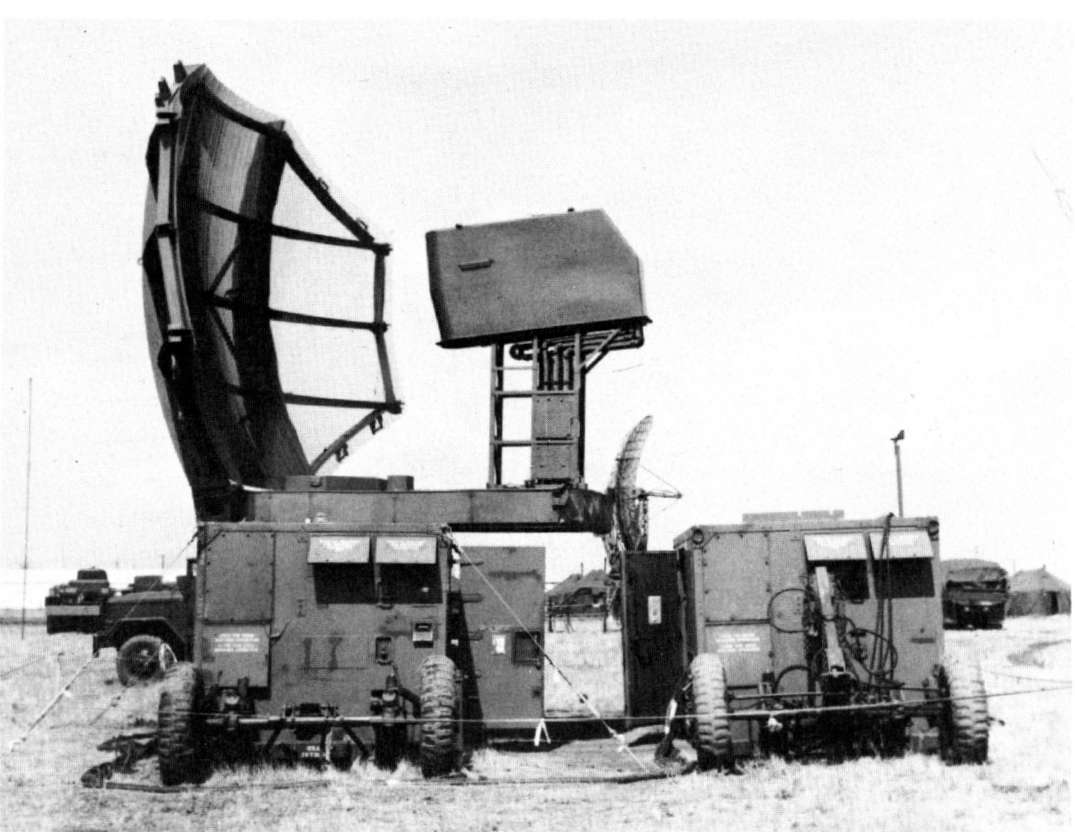
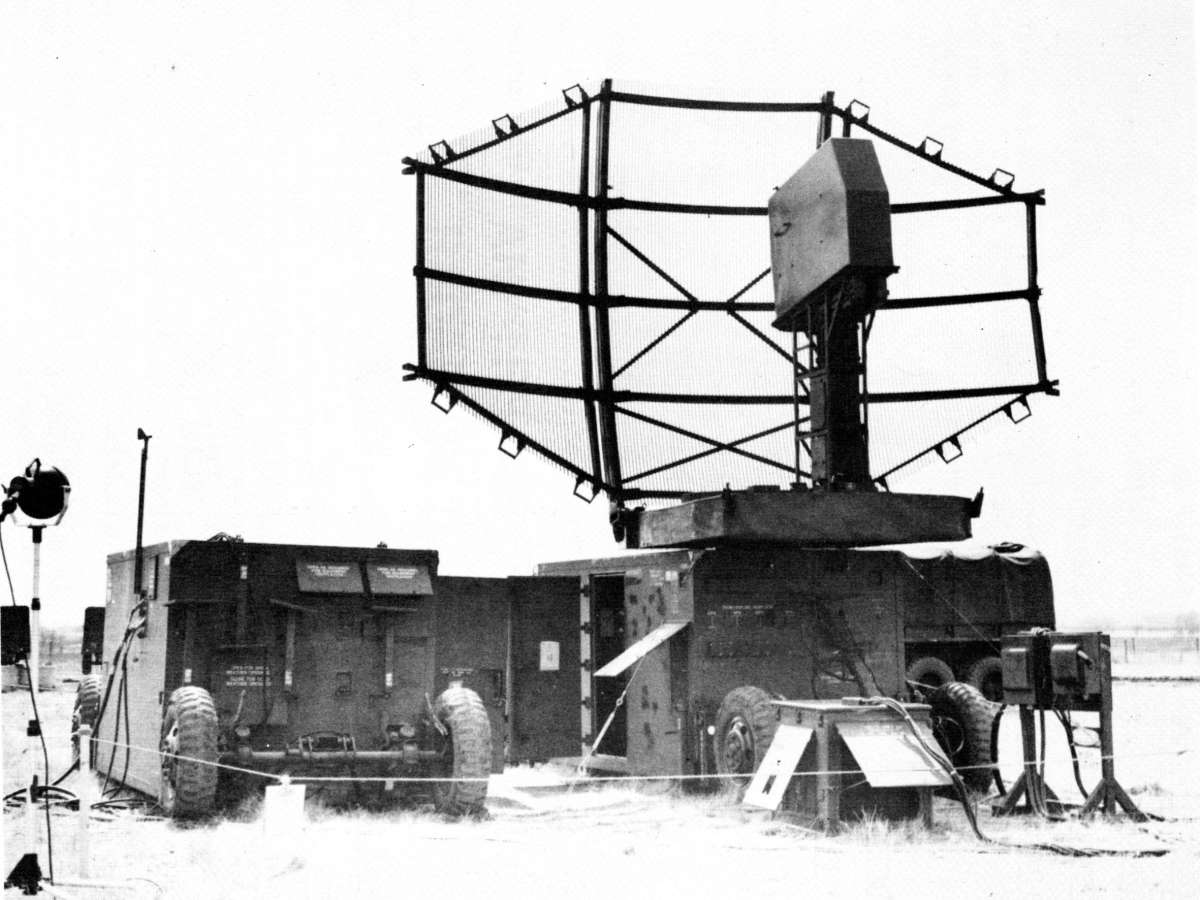
The AN/TPS-48 was a highly mobile tactical ground radar set, operating in E-Band, designed for simultaneous long-range search and height finding in a severe jamming environment.
The AN/TPS-48 used an antenna with Stacked Beam Cosecant Squared Pattern. The radar receivers use IF amplifiers with a logarithmic characteristic. The bandwidth of the receivers is switchable against active jamming. The radar signal processing includes an MTI- and the “Dicke Fix”- processing. The height system utilizes an analog computer and a digital evaluation system for providing an accurate target height.
The first radar of this type become operational in the US- Air Force on 4 December 1967.[1] This AN/TPS-48 was a transition radar to be replaced by the AN/TPS-43.
Sources and ressorces:
- Department of the Air Force, United States Air Force Statistical Digest, Fiscal Year 1968, Washington, 30 September 1968 (23. Edition)